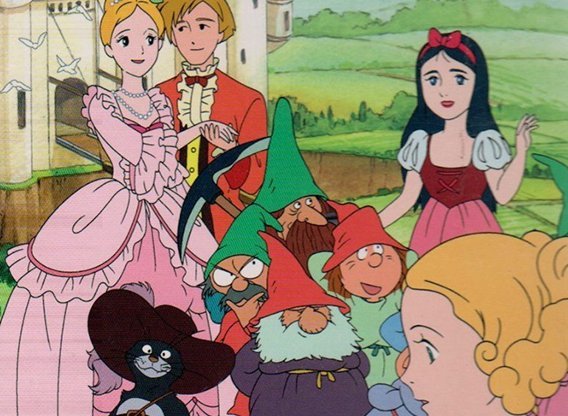
For many of us, the phrase "fairy tale" immediately conjures images of glass slippers, true love's kisses, and singing woodland creatures, all wrapped up neatly with a "happily ever after." This idyllic vision is largely thanks to Walt Disney Studios, whose animated classics have shaped generations of childhoods. But peel back the layers of Disney's magic, and you'll uncover the often brutal, terrifying, and surprisingly adult original narratives penned by the Brothers Grimm and other folklorists. The stark contrast between Grimm's Fairy Tale vs. Disney's Adaptation is a fascinating journey from the raw, unfiltered anxieties of bygone eras to the polished, optimistic escapism of modern entertainment.
Think you know the real story of Snow White or Cinderella? Get ready to have your childhood memories — and perhaps your perceptions of good and evil — thoroughly challenged.
At a Glance: Disney vs. The Originals
- Disney's Approach: Focuses on optimism, clear heroes and villains, "happily ever after" endings, and a family-friendly tone, often significantly altering plots for mass appeal and moral clarity.
- Grimm's & Original Fairy Tales: Rooted in folklore, these tales are often dark, violent, and explicit, featuring ambiguous morality, dire consequences, and powerful, sometimes brutal, moral lessons reflecting the harsh realities of their time.
- Key Differences: From stepsisters mutilating their feet to mermaids turning into sea foam, the originals rarely shy away from gruesome details or tragic conclusions. Disney's adaptations frequently soften character motivations, introduce new magical elements, and ensure love or good triumphs definitively.
The Lullaby vs. The Ledger: Unpacking the Origins of Storytelling
Before we dive into the specific shockers, understanding the fundamental differences in purpose and context for these stories is crucial. Both the Brothers Grimm and Walt Disney were storytellers, but their goals and methods couldn't have been more divergent.
Brothers Grimm: Preservers of Folklore
Jacob and Wilhelm Grimm, German academics and linguists, weren't primarily creating new stories. Instead, starting in the early 19th century (their first collection, "Children's and Household Tales," was published in 1812), they embarked on a monumental task: collecting and standardizing existing oral folk tales passed down through generations. Their aim was to preserve German cultural heritage, much of which was at risk of being lost.
These tales were often told by common folk, reflecting the harsh realities of their lives—famine, poverty, violence, and superstition were commonplace. Thus, the stories were cautionary, didactic, and often brutal, not shying away from death, mutilation, or profound moral ambiguity. They served as a form of cultural memory and instruction, preparing children for a tough world rather than sheltering them from it.
Walt Disney: The Dream Weaver
Fast forward to the 20th century. Walt Disney, with his company founded in 1923, was an innovator in animation and entertainment. His goal was to create immersive, visually stunning animated features that would appeal to a broad, international audience—primarily families and children. Disney wasn't interested in preserving folklore in its raw form; he was interested in adapting popular stories to fit his burgeoning brand of wholesome, optimistic, and ultimately profitable entertainment.
Disney's adaptations became synonymous with American popular culture, creating archetypes that defined generations. His studio transformed often terrifying fables into tales of hope, resilience, and, most famously, "happily ever afters."
Beyond the Sparkle: Core Differences Between Grimm's and Disney's Worlds
The chasm between Grimm's and Disney's tales isn't just about endings; it's about fundamental storytelling philosophy.
Tone & Atmosphere: Dark Morality vs. Sunny Optimism
Grimm's tales are drenched in a darker, more sinister atmosphere. They reflect a world where peril is ever-present, and consequences are often dire. Violence, death, and genuine fear are woven into the fabric of the narrative, serving to highlight moral failings or the sheer struggle for survival. There's a raw, almost pagan sensibility to many of them.
Disney stories, conversely, are typically optimistic and bright. Even when characters face adversity, there's an underlying sense that good will prevail. The tone is family-friendly, designed to entertain and uplift, with fear and violence often toned down or used sparingly to enhance dramatic tension rather than to illustrate grim reality.
Character Depth & Morality: Simple Archetypes vs. Relatable Personalities
In Grimm's tales, characters are often less defined, acting as archetypes rather than complex individuals. Motivations can be simple: a jealous stepmother without a complex backstory, a prince driven by conquest, or a child simply trying to survive. Distinctions between good and evil can sometimes feel less pronounced, and even "good" characters might make morally questionable choices.
Disney's characters, on the other hand, are often more fleshed out. They have detailed backstories, relatable emotions, and clear moral compasses (even villains often get a song explaining their motivations). This makes them more empathetic and easier for audiences to root for—or against. Disney often humanizes or animalizes supporting characters, like helpful mice or friendly dwarves, to enhance charm and relatability.
The Act of Adaptation: Collecting vs. Creating
The Grimms collected existing stories, often piecing together different versions they heard from various sources. Their "adaptation" was more about transcription, standardization, and sometimes minor refinement, but the core narrative and its often-harsh message remained largely intact.
Disney, however, engages in a much more transformative act of adaptation. He and his team take the core premise of a story and often significantly alter the plot, characters, and themes to fit their creative vision and commercial goals. This frequently means introducing new characters, removing gruesome elements, and, most notably, crafting entirely new endings.
The Message & Moral: Explicit Caution vs. Implicit Aspiration
Grimm's tales almost always convey clear, often harsh, moral lessons: honesty, hard work, the dangers of disobedience, or the ultimate price of vanity and cruelty. These lessons were often taught through vivid, unforgettable consequences.
Disney stories, while still having underlying messages, tend to focus more on universal themes like true love, the power of dreams, overcoming obstacles, and the triumph of good. The moral lessons are often less explicit and more aspirational, emphasizing personal growth and the inherent goodness of humanity rather than direct warnings against specific vices.
When Fairy Dust Meets Bloodstains: Iconic Tales Reimagined
Now for the main event—a head-to-head comparison of some of the most famous tales and how they were transformed. Prepare to see your favorite stories in a whole new light.
The Little Mermaid: A Sacrifice of Heart and Soul
Hans Christian Andersen's 1836 original "The Little Mermaid" is a heart-wrenching tragedy far removed from Disney's vibrant musical.
The Original: The mergirl's transformation comes at an agonizing cost: "every step she took, it was as if she were walking on sharp knives, so that her tender feet bled." She endures this pain for the prince, but he marries another princess, believing her to be his rescuer. The mergirl's sisters offer her a dagger, urging her to kill the prince and let his blood touch her feet to become a mermaid again. She refuses, choosing death, and turns into sea foam, earning a chance at an immortal soul only after 300 years of good deeds as a daughter of the air. It’s a tale of unrequited love, sacrifice, and spiritual yearning.
Disney's Adaptation: Disney's Ariel trades her voice for legs, but the pain is downplayed. Her prince is charming and devoted. Ursula is a clear villain to be vanquished. The story culminates in a magical transformation, Ursula's defeat, and Ariel marrying her prince, living happily ever after with a definitive human soul. The bittersweet introspection of Andersen's tale is replaced with triumphant romance.
Sleeping Beauty: A Nightmare in Slumber
While Disney's "Sleeping Beauty" features a valiant prince and the iconic villain Maleficent, its roots lie in far grimmer territory, particularly Giambattista Basile's 1634 "Sun, Moon and Talia" (a basis for the Grimm version).
The Original (Basile): Princess Talia "dies" from a flax splinter under her fingernail. Her father, heartbroken, places her in an abandoned country house. A king, hunting nearby, discovers her, rapes her while she is unconscious, and then leaves. She later gives birth to twins, Sun and Moon, still asleep. One twin, searching for milk, sucks the splinter from her finger, waking her. The king eventually returns, falls in love with the now-awake Talia, but his jealous queen orders the twins killed and served to the king. She also tries to have Talia burned alive. A sympathetic cook saves the children, substituting lamb for the twins. Ultimately, the queen is killed, and Talia marries the king.
Disney's Adaptation: Disney heavily sanitizes these elements. Aurora falls asleep from a spindle prick, not a flax splinter. She awaits "true love's kiss" from Prince Phillip, who bravely battles the formidable Maleficent (who transforms into a dragon). There's no rape, no unwanted pregnancies, no cannibalistic plots, and no murderous queen. It’s a clear battle of good versus evil, culminating in a chivalrous rescue and a storybook wedding.
Peter Pan: The Boy Who Never Grew Up, Or Let Anyone Else Either
J.M. Barrie's original "Peter Pan" (1904 play, 1911 novel) is a whimsical yet surprisingly dark exploration of childhood and eternity.
The Original: Peter Pan is not just forever young; he's dangerously indifferent to the lives of others, particularly the Lost Boys. The chilling truth is that "when they seem to be growing up, which is against the rules, Peter thins them out." Yes, Peter kills the Lost Boys if they grow up or get too old. The Lost Boys themselves are babies who fell out of their prams and were never claimed. Captain Hook, after being outwitted, tragically throws himself to the crocodile, preferring death to dishonor. The story ends with Wendy, then her daughter Jane, and later Jane's daughter Margaret, returning to Neverland for "spring-cleaning" with Peter, eventually growing up and losing the ability to fly, highlighting the fleeting nature of childhood.
Disney's Adaptation: Disney's Peter is mischievous and adventurous but innocent. The darker implications of the Lost Boys' fate are entirely removed. Captain Hook is a comical, bumbling villain, often surviving his encounters. The focus is on the wonder and adventure of Neverland, with a clear separation between the Darlings' family life and their fantastical escapades.
Cinderella (Ashputtel): The Price of a Gilded Shoe
The Brothers Grimm's "Ashputtel" (Cinderella) is a tale of magical intervention, but not quite in the way Disney portrays it.
The Original (Grimm): There's no fairy godmother in Grimm's version. Instead, a magical wishing tree grows from Cinderella's mother's grave, where white doves act as her magical helpers, granting wishes and providing her beautiful silver and gold dresses for the ball. The slipper is made of gold, not glass. In a famously gruesome scene, the stepsisters, at their mother's urging, literally mutilate their feet to fit the slipper: one cuts off her big toe, the other her heel. A dove, perched on the wishing tree, warns the prince of their deception, revealing the blood-soaked shoe. At the wedding, the doves peck out the stepsisters' eyes, leaving them blind as punishment.
Disney's Adaptation: Disney introduces the iconic Fairy Godmother, the pumpkin carriage, and the sparkling glass slipper. The mice become loyal, helpful friends. The stepsisters are cruel and foolish but never resort to self-mutilation, nor do they face such a horrifying punishment. The focus is on Cinderella's kindness and perseverance leading to true love, with a more forgiving, though still deserved, outcome for the villains.
Snow White: The Queen's Vengeance and a Ghastly Dance
The story of Snow White is perhaps one of the most vividly altered from its Grimm origins.
The Original (Grimm, 1812/1819): In early Grimm editions (1812), the Evil Queen was Snow White's biological mother, a horrifying detail later changed to "stepmother" to soften the story for children. The queen asks the Huntsman to cut out Snow White's lungs and liver, which she plans to eat, believing them to be magical. Snow White's awakening isn't from a gentle kiss, but in the 1819 version, when a servant carrying her coffin stumbles, dislodging the piece of poisoned apple from her throat. In the 1812 version, it was when the dwarfs, angered by her persistent "death," strike her. The most memorable punishment for the Evil Queen (stepmother in later versions) is incredibly gruesome: she is forced to dance in red-hot iron shoes until she drops dead.
Disney's Adaptation: Disney gives us the iconic evil stepmother, the "fairest of them all" motif, and the lovable Seven Dwarfs. The Huntsman is ordered to bring back Snow White's heart. Most famously, Snow White awakens from the prince's "true love's kiss." The queen meets her end by falling off a cliff during a storm, a far less agonizing fate than dancing to death in heated iron shoes. Disney's version Snow White and the Seven Dwarfs establishes many of the tropes that define his later adaptations, emphasizing romance and heroism.
Pinocchio: A Puppet's Perilous Journey
Carlo Collodi's 1883 "The Adventures of Pinocchio" is a far darker, more cautionary tale than Disney's musical adventure.
The Original: Pinocchio is far more mischievous and disobedient, even violent. In a shocking early scene, he kills Jiminy Cricket by crushing him with a mallet after Jiminy tries to advise him. Jiminy later reappears as a ghost to continue his role as a conscience. The Blue Fairy, far from being a gentle maternal figure, tells Pinocchio that she is dead at one point. Pinocchio faces death multiple times, is hanged by assassins (though rescued), almost burned, and faces many other grim scenarios illustrating the dangers of disobedience and selfishness.
Disney's Adaptation: Disney transforms Jiminy Cricket into a beloved sidekick and Pinocchio's official conscience, who guides him throughout his adventures. The Blue Fairy is a benevolent, ethereal guardian. The story emphasizes Pinocchio's journey to become "a real boy" through acts of bravery, honesty, and selflessness, greatly softening the grim consequences and violence of the original.
The Hunchback of Notre Dame: A Tragic Obsession
Victor Hugo's 1831 novel, "Notre-Dame de Paris," is a sprawling, tragic masterpiece of unrequited love, obsession, and societal cruelty.
The Original: Esmeralda, the beautiful gypsy dancer, is tragically hanged by the villainous Frollo (who is a priest, not just a judge, and made a pact with the devil), all while Quasimodo, the deaf and often cruel bell-ringer, watches helplessly. In a rage, Quasimodo then kills Frollo by pushing him from the cathedral. Quasimodo, heartbroken, goes to Esmeralda's grave, lies down beside her body, and eventually starves to death, his skeletal remains found years later. The novel is a profound commentary on injustice and the human condition.
Disney's Adaptation: Disney's "The Hunchback of Notre Dame" makes Quasimodo a sympathetic hero from the start, a kind soul mistreated by Frollo (who is here a corrupt justice minister, not a priest). Esmeralda is rescued, and Quasimodo survives, finding acceptance among the people of Paris. The ending, while bittersweet as Quasimodo does not get the girl, is far from the complete devastation of Hugo's work, emphasizing self-worth and heroism.
The Fox and the Hound: A Tale of Inevitable Loss
Daniel P. Mannix's 1967 novel "The Fox and the Hound" offers a stark, unsentimental look at nature, rivalry, and the circle of life and death.
The Original: The original story is a gritty, realistic portrayal of the predator-prey relationship and the harsh realities of hunting. Tod the fox, relentlessly pursued by Copper the hound, eventually dies of sheer exhaustion after a prolonged, grueling chase. Later, Copper, now old and unable to hunt, is shot by his master as he's no longer useful, highlighting the brutal pragmatism of the hunter's world.
Disney's Adaptation: Disney's 1981 film transformed this into a poignant story about an unlikely friendship between Tod and Copper, challenged by their natural instincts and human expectations. While the friendship faces obstacles and the characters grow apart, the ending is bittersweet but hopeful. Both Tod and Copper survive, though their relationship is irrevocably changed. The grim cycle of death and utility in the original is replaced with themes of enduring connection and overcoming prejudice.
The Business of Enchantment: Why Disney Changed the Narrative
Why did Disney consistently lighten, soften, and often completely rewrite these foundational tales? The reasons are multifaceted and largely pragmatic:
Audience Appeal and Mass Marketability
Disney's primary audience has always been children and families. The raw violence, explicit sexuality, and tragic endings of original fairy tales were simply not suitable for this demographic, nor for the studio's brand image. By sanitizing and simplifying, Disney made the stories accessible and enjoyable for a global audience.
Brand Identity: The "Happily Ever After" Promise
The "happily ever after" ending became a cornerstone of the Disney brand. It wasn't just a narrative device; it was a promise to the audience. People came to expect upliftment, resolution, and the triumph of good from a Disney film. This consistency helped build a powerful and enduring brand identity.
Commercial Success and Longevity
Rewriting these stories for a family-friendly audience made them enormously successful commercially. Happy endings and relatable characters translate into merchandise, sequels, theme park attractions, and enduring cultural relevance. The goal was to create timeless entertainment that could be enjoyed by generations, rather than simply preserving historical narratives.
Cultural Sensitivity and Evolving Norms
What was acceptable in storytelling in the 17th or 19th century—rape, infanticide, graphic mutilation—is certainly not by 20th and 21st-century standards, especially for children's media. Disney's adaptations reflect a shift in societal values and a desire to shield younger audiences from overly disturbing content.
Beyond the 'Happily Ever After': What These Tales Truly Offer
The vast difference between Grimm's Fairy Tale vs. Disney's Adaptation isn't about one being "better" than the other. Both versions hold immense value and offer unique insights.
The original tales, whether from the Brothers Grimm or other folklorists, serve as windows into the past. They reveal the fears, anxieties, moral codes, and coping mechanisms of societies that lived in much harsher realities. They offer direct, often brutal, lessons about consequences, survival, and the darker aspects of human nature. They are not just stories; they are cultural artifacts, reflecting the collective unconscious of a bygone era.
Disney's adaptations, on the other hand, provide powerful narratives of hope, aspiration, and the triumph of good. They teach children about courage, kindness, perseverance, and the importance of dreams. They've given us indelible characters and songs that define childhood for millions, creating a shared cultural language of optimism and magic. They show us the human capacity to imagine a better world, even when adapting tales from a grimmer past.
Reclaiming the Narrative: Delving Deeper into Story's True Power
Understanding the Grimm's Fairy Tale vs. Disney's Adaptation isn't just about debunking childhood myths; it's about appreciating the power and evolution of storytelling itself.
Encourage yourself, and the young people in your life, to delve deeper. Read the original Grimm's tales (many are available in accessible translations) or the works of Hans Christian Andersen and other folklorists. Compare them to the Disney versions you know. You'll gain a richer understanding of:
- The historical context of stories: How they reflect the societies that created them.
- The art of adaptation: How narratives can be transformed to serve different purposes and audiences.
- The enduring nature of archetypes: Why certain characters and plotlines resonate across centuries and cultures, even when their details change.
- The power of narrative: How stories, whether grim or glamorous, help us make sense of the world, teach lessons, and explore the vast landscape of human experience.
Both the grim originals and the glittering Disney versions have a place in our cultural landscape. One shows us the world as it was, stark and challenging; the other shows us the world as we might wish it to be, full of hope and magic. By understanding both, we truly grasp the depth and breadth of these timeless tales.